This week on Registry Matters: Florida has passed a law making it illegal for registrants to speak to minors in public, raising alarming First Amendment free speech questions. Then, a Louisiana man spent 179 days in jail over charges that were ultimately dropped, exposing how registry and probation systems can inflict devastating errors with zero accountability. Finally, the Supreme Court has ruled that geofence warrants constitute Fourth Amendment searches, a landmark decision protecting cell phone location privacy from warrantless police tracking.
Show Notes
- [02:54] Is Talking to Kids Now Illegal? — Florida’s new ban on registrants speaking to minors in public faces serious constitutional challenges on free speech grounds.
- [10:59] 179 Days Jailed Over Dropped Charges — A Louisiana case exposes how registry and probation systems can trap people in prolonged incarceration without meaningful accountability or recourse.
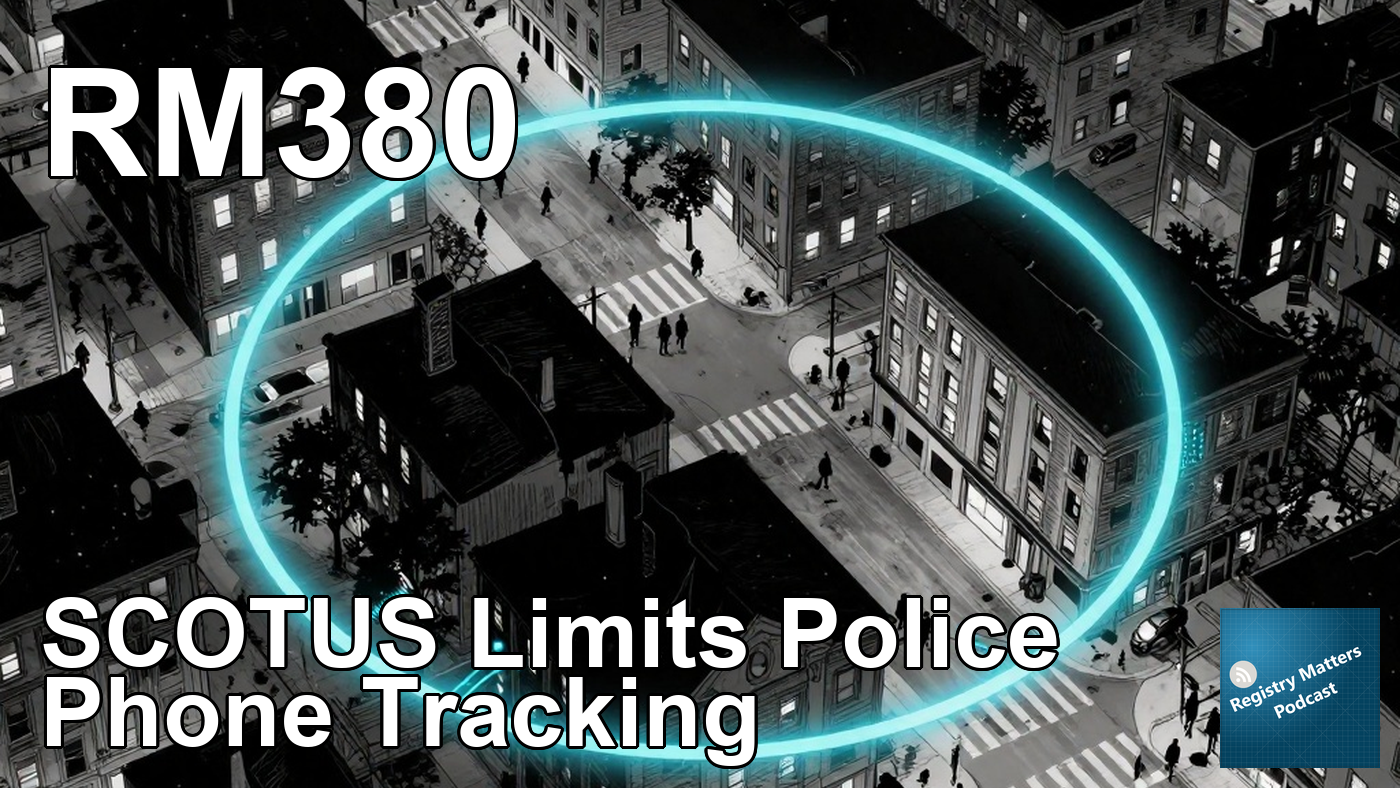
- [22:23] SCOTUS Limits Police Phone Tracking — The Supreme Court rules that geofence warrants are Fourth Amendment searches, establishing new protections for cell phone location privacy.
Keywords
Florida registrant restrictions, free speech, geofence warrants, Fourth Amendment, Louisiana incarceration, Supreme Court, registry laws, police phone tracking
Chapters
[0:00] Introduction
[2:54] Is Talking to Kids Now Illegal?
[10:59] 179 Days Jailed Over Dropped Charges
[22:23] SCOTUS Limits Police Phone Tracking
Subscribe & Support
Registry Matters: https://www.registrymatters.co/
FYP Education: https://fypeducation.org/
Email us: registrymatterscast@gmail.com
Leave an old fashioned voice message: 747-227-4477
Support us on Patreon: https://www.patreon.com/registrymatters
Join the Discord server: https://discord.gg/6FnxwAQm57
Want to support Registry Matters with some swag: https://fypeducation.org/shop/
Apple Podcasts: https://itunes.apple.com/us/podcast/registry-matters/id1305039280
RSS: https://www.registrymatters.co/feed/podcast/
Spotify: https://open.spotify.com/show/3d75P7Kc37n2l79m89F9KI
YouTube: https://www.youtube.com/registrymatters
The Registry Matters Podcast’s mission is to cover issues surrounding the Registry. We cover cases that will peel back the veneer of what we need to do to change our lives for the better. We cover news articles that spark conversations about the total insanity of this modern day witch hunt. This podcast will call out bad policy and call out those that are making bad policy.
To change things for the positive, we need to act. We are 6-7-8-900k strong. With that many people, plus their friends and family, over a million people are affected by the registry. We should be able to secure donations to hire lawyers and lobbyists to move the agenda in our favor. We need our people to be represented.
Florida has passed a new law making it illegal for registrants to speak to minors in public. The law raises serious First Amendment free speech concerns, as it effectively criminalizes ordinary public conversation based solely on a person’s registry status.
A Louisiana man spent 179 days in jail over charges that were ultimately dropped, highlighting how registry and probation systems can inflict devastating errors. The case exposed a lack of meaningful accountability or recourse for individuals harmed by these system failures.
The Supreme Court ruled that geofence warrants constitute searches under the Fourth Amendment, marking a landmark decision for cell phone location privacy. This ruling protects individuals from warrantless police tracking of their phone location data.
Florida’s new law banning registrants from speaking to minors in public has raised alarming First Amendment questions about whether such restrictions unconstitutionally limit free speech. The law is being scrutinized for criminalizing protected speech based on registry status rather than any threatening conduct.
A geofence warrant allows police to request location data from tech companies for all devices within a certain geographic area during a specific time period. The Supreme Court has now ruled that these warrants constitute Fourth Amendment searches, meaning law enforcement generally needs proper judicial authorization before using this surveillance technique.